Family Owned & Operated Since 1992
Have Questions?
614-NEW-ROOF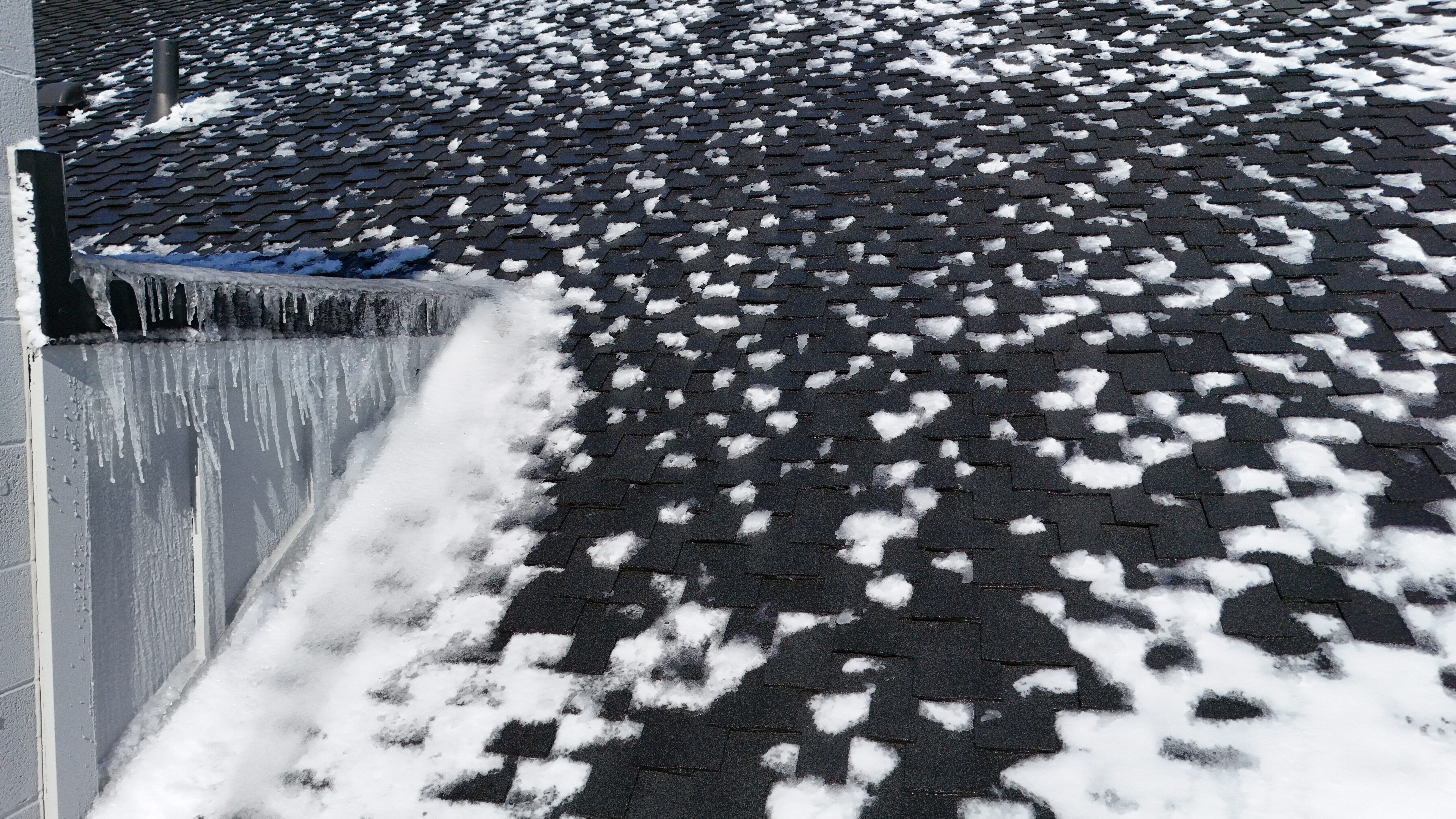
February 3, 2026

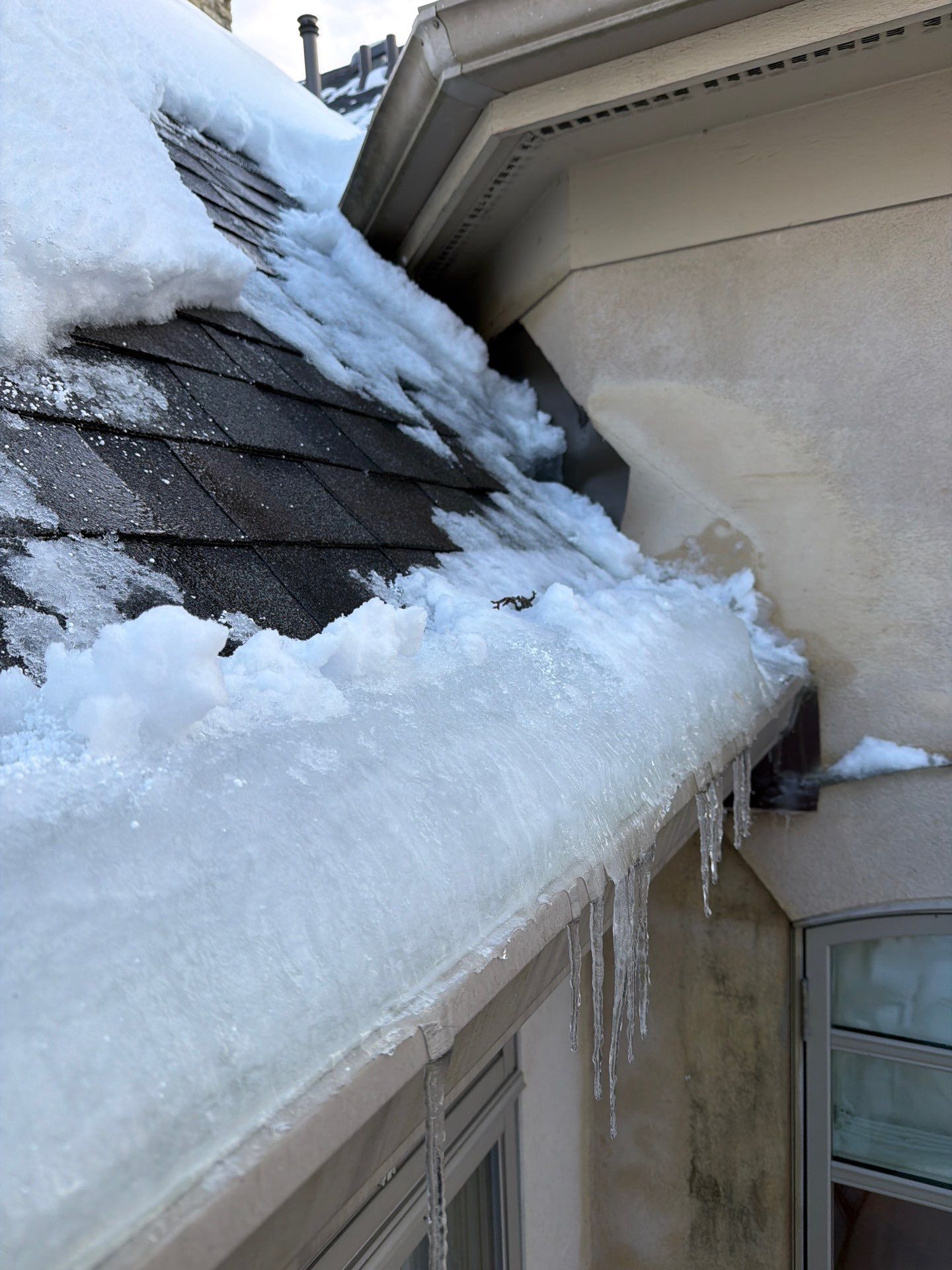
It’s that time of year when the snow accumulates on the roofs and eventually causes ice dams concerning many homeowners. Ice dams occur when snow melts on the roof and water runs down to the roof’s edge before refreezing.
Although it may look cool to most people at a quick glance, this can be very damaging to your roof. When the ice starts to melt and gets stopped at the roof’s edge, water can backup underneath the shingles which then can lead to damaging the decking and furthermore the interior of your home when not addressed.
Ice dam formations are common on the lower parts of the roof as the snow melts form the warmer, upper sections of the roof. Generally, the coldest part of your roof is right at the edge lines so, a heavy buildup of snow that melts during the day combined with below freezing temperatures at night causes the ice dams. Common areas for ice dams are along the gutters, roof valleys, behind chimneys, and around skylights. Ohioans know all too well about ice dams during the winter months so don’t feel like it’s only happening to your home.
To try to prevent ice dams, it is best practice for immediate action by using a roof rake or push broom to remove the snow from the edge while standing on the ground. Inside the home when looking at the attic space make sure your insulation covers the whole attic and natural ventilation systems are working properly. For example, the heat in your attic is holding a uniform roof surface temperature, and you’re not seeing any cracks or holes.
Ice dams can still raise many questions as a homeowner, so never hesitate to reach out to Newman Roofing with any of those concerns and we will be happy to answer any questions you have on how to best protect your roof.

Built to protect, designed to impress. Newman Roofing has you covered.
5.0 Average Rating (1350+ Reviews)
825 Kintner Parkway
Sunbury, Ohio 43074
Monday - Friday: 8:00 AM - 5:00PM